
OMEGA 3 food comparisons
OMEGA 3 COMPARISONS in Foods
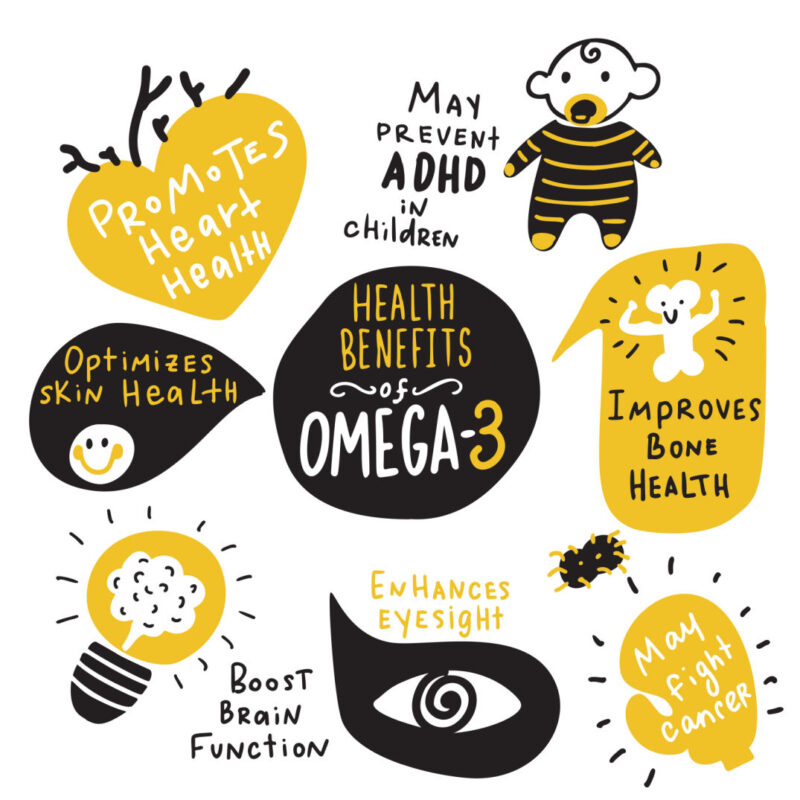
Omega-3 fatty acids have various benefits for your body and brain.
Healthy adults should consume at least 250–500 mg of eicosapentaenoic acid (EPA) and docosahexaenoic acid (DHA) per day. You can reach that amount by eating two servings of fatty fish per week or by eating 1600mg (males and 1100mg (females) of ALA Omega 3 per day. Docosahexaenoic acid (DHA) is an omega-3 fatty acid essential for brain development during pregnancy and early childhood. It has also been linked to improved heart health, vision, and reduced inflammatory responses. This long-chain fatty acid is found in cell membranes throughout the body and helps transmit messages between nerves. Our bodies naturally produce DHA in small amounts, but to achieve adequate amounts, DHA needs to be consumed through dietary sources
Lower triglyceride levels and blood thinning from ALA or EPA/DHA Omega 3 have been observed. It has been reported that excessive consumption of Omega 3 can lead to bleeding.
It has been noted that vegans convert a higher percentage of ALA into EPA as compared with nonvegans (perhaps 20% conversion). If this is true then a vegan’s, Intake is believed to be 1,600 mg for males and 1,100 mg for females per day, according to the National Institutes of Health
Omega 3 food examples:
1 ounce of ALGAL OIL contains 112 grams of DHA Omega 3
1 ounce of SACHA INCHI SEEDS 3.8 grams ALA Omega 3
1 ounce of HEMP SEEDS 3 grams of ALA Omega 3
1 ounce of FLAX SEED MEAL 1.8 grams of ALA Omega 3
1 ounce of CHIA SEEDS 4.9 grams of ALA Omega 3
1 ounce of WALNUTS yields 2.5 grams ALA Omega 3
1 ounce of SOYBEANS yields 411 mg of ALA Omega 3
1 ounce of PERILLA OIL 18 grams of ALA Omega 3
1 ounce of MACKEREL yields 1.3 grams of EPA/DHA combined.
1 ounce of SALMON yields 600 mg of DHA/EPA combined Omega 3
1 ounce of COD LIVER OIL yields 5 grams of DHA/EPA combined
1-ounce OYSTERS yield 114 mg of DHA/EPA combined
1-ounce SARDINES yields 280 mg DHA/EPA combined
1-ounce ANCHOVIES yield 571 mg of DHA/EPA combined
1 serving of 3 softgels AHIFLOWER Oil yields 945mg ALA and 384mg SDA Omega 3
Other sources of DHA are being made from fermented fungi and algal oil:
Sheep’s milk (an A2 milk product) has no lectins and contains short- and medium-chain fatty acids, important for a healthy human diet. Compared to the milk from other ruminants, sheep’s milk has a higher concentration of butyric acid, omega 3 fatty acids and conjugated linoleic acid (CLA)
Resumo Fungi have the ability to produce omega-3 essential fatty acids. Fatty acids in the diet are known to reduce the development of cardiovascular problems and other chronic-degenerative diseases. Currently, the main food source of omega-3 fatty acids is saltwater fish, but there are concerns about potential health risks, including environmental contaminants, such as some metals, as well as ecological issues related to the extinction of some species. Therefore, interest in the biotechnology area has been increasing with the aim of extracting bioactive compounds from certain fungi species, as well as producing biomass, food, and energy.
There is the controversy that the USDA has not approved these omega-3 additives from fungi and algae as organic, yet companies are labeling them as organic.
AHIFLOWER (Buglossoides arvensis) SEED OIL:
Ahiflower® oil is the richest and most effective combined Omega-3 (SDA and ALA) and Omega-6 (GLA and LA) fatty acid source from a single non-GMO plant found in nature. While there are many sources of plant based Omega-3 ALA such as flax, chia, sacha inchi and hemp seed oils, Ahiflower® oil is the richest source of SDA (stearidonic acid) which converts more efficiently to the Omega 3 fatty acid EPA that is found in fish oil. A human clinical trial found that Ahiflower® oil has up to a 3-4 times greater conversion rate to Omega 3 EPA compared to flax seed oil. Ahiflower® oil also contains beneficial Omega 6 gamma linolenic acid (GLA). A true Omega 3 and Omega 6 powerhouse with ALA, SDA and GLA, delivering a healthy 4 to 1 balance of Omega 3 to Omega 6, Ahiflower® oil is the most eco-conscious, sustainable way to get the benefits of EPA found in fish oil from a vegan, plant-based source.