
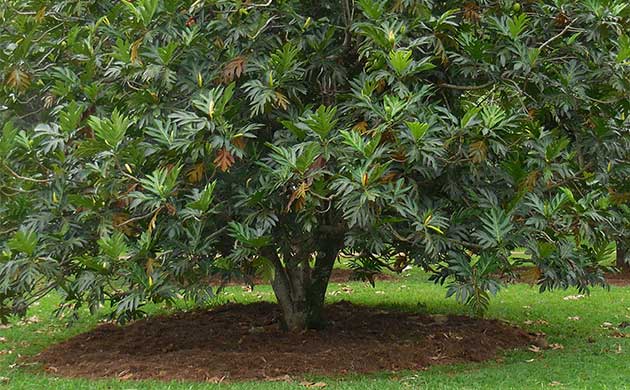
BREADFRUIT STATS
INTRO
Hawaiians call it ulu, The Igbos people of Nigerian call it ukwa, while the Yoruba people know it ias afon. The Mexicans call it fruta de pan, and Papua New Guineans call it kapiak. The people of India make breadfruit curry and breadfruit chips. The Jamiacan rastafarians make a “rundung” stew with breadfruit. Mexicans refry breadfruit the way they refry beans. In Trinidad, they make a breadfruit pumpkin soup. In Tobago, they love breadfruit pie. The Ministry of Agriculture in Kingston, Jamaica, has published recipes for breadfruit smoothies and deep-fried breadfruit croquettes on its website. The Moraceae family of plants include the fig, mulberry, jackfruit and breadfruit are a family of flowering plants comprising about 38 genera and over 1100 species. Most are widespread in tropical and subtropical regions.
The three main types of breadfruit found in the Caribbean are the yellow heart, the white heart, and the prickly breadfruit, more commonly known as chataigne, the french word for chestnut as the cooking breadfruit aroma is that of baking bread and chestnut. The Chataigne breadfruit variety has twice the amount of protein as other varieties.
The breadfruit originated in the areas of New Guinea and the surrounding pacific islands of Micronesia and the Indo-Malayan Archipelago. English explorer Joseph Banks sailing with Captain Cook was so impressed with breadfruit’s versatility as a food that after several periods of famine in Jamaica between 1780 and 1786, King George III was persuaded to import seedless breadfruit trees to provide food for the British slaves. Captain William Bligh attempted his first voyage to take 1000 breadfruit trees from Tahiti in 1787 to Jamaica but on this expedition, his crew staged a mutiny and threw himand 17 other officers overboard, and forced them to sail 41 days to the Dutch port to Timor. His second attempt five years later was a successful one, and in 1793 the HMS Providence delivered 600 plants from Tahiti to St. Vincent and Jamaica. The shipment also included the seeded breadfruit, chataigne, which had been picked up during a stopover at Timor. The director of the St. Vincent Botanical Garden then distributed plants to the Leeward and Windward Islands and to the Bahamas. The French also brought breadfruit to their Caribbean colonies of Martinique and Cayenne called Kele Kele, a seedless variety from Tonga in the late 1790s via the Pamplemousse Botanical Garden in Mauritius.
BREADFRUIT VS BREADNUT
Breadnut, also called Maya nut, belongs to the Mulberry plant family as does Breadfruit, but it is a different species. Its botanical name is Brosimum alicastrum or Artocarpus camansi blanco. It is indigenous to the Pacific Islands and Southeastern Asia. Its leaves are similar to the leaves of the breadfruit varieties. , it is also been consumed for at least 3,000 years and was exported to the Caribbean in the 1790s by the French for their slave colonies. The seeds are boiled, steamed, roasted over fire and eaten with salt. Sometimes they are made in the form of a puree
BREADFRUIT AND CLIMATE CHANGE SOIL EROSION REFORESTATION AND WORLD HUNGER
Breadfruit expert Nyree Zerega is the director of the Program in Plant Biology and Conservation, a partnership between Northwestern and the Chicago Botanic Garden. He and other researchers have stated that as the climate on the earth warms, the most heavily utilized crops such as corn, soybeans, and rice will decline in yields. Breadfruit however will remain relatively unaffected as it grows in the tropics and is capable of adjusting to more minor climate changes. Breadfruit is a starchy nutritious food with fiber, vitamins, and minerals and has been eaten for thousands of years in the tropics. Breadfruit trees live for over 50 years and just one tree can feed a family of four. The trees prevent erosion and remove carbon dioxide from the atmosphere. The non-profit organization called Trees that feed (www.TreesThatFeed.com) has planted thousands of breadfruit trees all over the world where the breadfruit tree can grow. This is an ongoing endeavor that has helped feed thousands of people, created economic improvements, and helped to restore lost forests.
SCIENCE ANALYSIS OF BREADFRUIT
Breadfruit contains no gluten proteins and no FODMAPs
Breadfruit analysis of its sugars showed 1.3g of sucrose, .6 grams of fructose, and .7 grams of glucose. Breadfruit in the flour form is very high Insoluble fiber ( not digested in the small intestine and feeds the gut bacteria in the large intestine:
The breadfruit (A. altilis) is a member of the genus Moraceae that contains about 50 species of trees. Research on the chemical constituents of breadfruit has isolated several classes of compounds such as various triterpenes and flavonoids. Artocarpus is a rich source of prenylated phenolic compounds such as geranylated flavones. The pharmacological studies have indicated that some flavonoids from breadfruit (A. altilis) have anti-inflammatory activities and are able to inhibit 5-lipoxygenase of cultured mastocytoma cells, cathepsin K, and 5α-reductase.
Breadfruit is a valuable source of essential amino acids
PFBp (protein fraction of Breadfruit pulp), is rich in aspartic acid (6.80%) and glutamic acid (6.53%) but poor in methionine (0.66%) and cysteine (0.52%) The protein quality of breadfruit pulp is superior to those of corn, wheat, rice, soybean, potato, and pea. Breadfruit pulp contains phenylalanine, isoleucine, leucine, and valine. PFBp has all the essential amino acids, but especially high levels of lysine, leucine, phenylalanine, and threonine.
Breadfruit is a better source of protein than cassava and its protein content is comparable to that of sweet potato and banana. Breadfruit is an excellent source of complex carbohydrates, fiber, energy, protein, and vitamins. In addition, it is gluten-free but has a low lipid content.
In March 2020 The journal of Functional Foods reported a Breadfruit amino acid composition showing the average Lysine to Arginine content and ratio was 4.6g(Lysine) and 2.6g (Arginine), nearly a 2:1 ratio. These amounts are based on 100 grams of Breadfruit. These figures differ greatly from some other researchers’ Breadfruit analysis which shows the amino acid Lysine to be slightly higher than Arginine.
. A study on the Breadfruit variety called White Heart was conducted to determine its amino acid, fatty acid, and carbohydrate content using high-performance liquid chromatography (HPLC) and gas chromatography (GC). HPLC to determine breadfruit amino acids and fatty acids, while GC was employed to analyze carbohydrate content. These findings based on fresh weight per 100 grams indicate that ‘White Heart’ is a rich source of nutrients. Essential amino acids at the highest concentrations were leucine (605 mg) and lysine (799 mg). Essential fatty acids detected at the highest concentration were linoleic acid, an omega-6 fatty acid (0.15 mg), and linolenic acid, an omega-3 fatty acid (2.13 mg), both at the ripe stage. Carbohydrates present at the highest concentrations were arabinose (468 mg), sucrose (415 mg), and glucose (365 mg). The starch content was 15.5 g
HISTORY OF BREADFRUIT
THE USES OF THE BREADFRUIT TREE WOOD
The wood of the breadfruit tree was one of the most valuable timbers in the construction of traditional houses and furniture in Samoan architecture. Although the wood is not very hard, it is strong, pliable, and termite resistant. The lightness of the breadfruit tree wood makes it perfect for making surfboards. The wood is light and durable with a light golden color that darkens with age. It is used for the construction of houses and canoes because it resists termites and marine worms. Its lightweight wood resists termites and ocean worms and is used for the hulls of outrigger canoes fashioned from a single log and are still made in parts of Micronesia and Melanesia. The wood is carved into attractive bowls, statues, handicrafts, furniture, and other items. The wood is also used to make traditional Hawaiian drums. Older trees are an important source of firewood, especially on the atoll islands. Its wood pulp can be used to make paper. The latex of the breadfruit tree is very sticky and used for glue, caulk, and even chewing gum. Bees are attracted to and harvest droplets of latex from the surface of the fruit.
HEALTH BENEFITS OF BREADFRUIT
One cup of breadfruit provides 60 grams of carbohydrates. It is very beneficial for athletes. The fiber in breadfruit inhibits the absorption of glucose in foods, thus controlling diabetes. It contains compounds, which are needed by the pancreas for producing insulin in the body The fiber in breadfruit flushes out the toxins from the intestine, aiding in the proper functioning of the bowel and intestines. It prevents digestion-related diseases like heartburn, acidity, ulcer, and gastritis, eliminating toxic compounds from the gut. Breadfruit protects the colon’s mucous membrane by warding off cancer-causing chemicals from the colon.
Breadfruit is an excellent source of potassium. This heart-friendly nutrient reduces blood pressure in the body and regulates the heart rate by minimizing the effects of sodium. It conducts electrical charges that drive muscular contraction in the skeletal system including the heart. Dietary fiber helps reduce cholesterol by preventing its absorption in the gut. It lowers bad cholesterol (LDL), while elevating good cholesterol (HDL) in the body. It decreases triglyceride levels, which is one of the main causes of heart attacks. Breadfruit contains antioxidants, which help the body to develop resistance against infectious agents and free radicals from the body that lead to aging and other age-related diseases
With a cup of breadfruit containing about 1,078 milligrams of potassium in comparison with just 4.4 milligrams of sodium, the food helps the blood vessels relax, thereby maintaining a stable blood pressure. Studies have also shown that people who consumed 4,069 mg of potassium per day had 49 percent lower risk of death from ischemic heart diseases compared to those who consumed less than 1,000 mg per day.
The high fibre content of breadfruit makes its absorption into the bloodstream proceed slowly and this also reduces cholesterol, regulates blood sugar and contributes immensely to overall cardiovascular health Packed with an abundance of vitamin C and antioxidants required by human body, breadfruit could aid the immune system in developing resistance to infections as well as in eliminating carcinogenic radicals in the body The bowel-easing property of breadfruit seeds is attributed to the food’s high fibre content. It also helps prevent constipation and bloating and reduces cholesterol absorption in the gut. Breadfruit seeds also help in the stimulation of peristaltic motion and gastric juices which protect the body from colorectal cancer.
Asides the cognitive benefits derived from them, breadfruits also play an important role in supporting skeletal movement and smoothening muscle contraction because of their potassium content. Breadfruit seeds are also known to possess vital nutrients that help conserve calcium in the body. Their riboflavin, zinc, and manganese components are also essential for bone metabolism and overall bone health.
The Collagen-producing property of breadfruits coupled with of high concentration of vitamin C means the delicacy might indeed offer certain anti-aging benefits following that collagen keeps the skin glowing and free from wrinkles. Breadfruits also contain sufficient amounts omega 3 and 6 fatty acids, two vital polyunsaturated acids that support foetal growth and are important for a foetus’ retina and neuron development. The Omega 3 and 6 fatty acids in breadfruits also help regulate sebum production in the scalp, reduces hair breakage, promote hair growth, and aid overall mind & body development.
BREADFRUIT SEED HEALTH BENEFITS
The highly versatile breadfruit seed (also called breadnut by some), is fibrous and protein-packed that are popular in Nigeria and is prepared plainly with potash, as porridge, or roasted to be eaten with coconut and palm kernels. The potassium, folate, and wide variety of antioxidants in breadfruit seeds are believed to give neurological benefits to boost in mental dexterity. While folate has been shown to lower the risk of Alzheimer’s, potassium has been found to be associated with an increase in blood flow to the brain; amplify neural activities and enhance concentration. Also, the vitamin B6 component of breadfruit seeds is also associated with curtailing mood swings and enhancing overall emotional stability as the magnesium content regulates sleep and reduces insomnia.
BREADFRUIT FACTS
.
Breadfruit trees bear fruit from 2-3 years after planting as a sapling and remain productive for decades. Breadfruit can also be used like a vegetable. It can be baked, boiled, fried, or roasted. Fruits weigh between 1-5 kg. Breadfruit trees are highly productive, but may suffer from drought when grown on porous coral soils in the Pacific, strong winds and salt spray damage. In the South Pacific, the trees yield 50 to 150 fruits per year, however, in southern India, normal production is 150 to 200 fruits annually. Productivity varies between wet and dry areas. On average in the Caribbean, a conservative estimate is 25 fruits per tree, Barbados 16 to 32 tons per hectare (6.7-13.4 tons/acre). Most breadfruit varieties also produce a small number of fruits throughout the year, so fresh breadfruit is always available, but somewhat rare when not in season.
In general, well-mature but just short of ripeness fruits are harvested by hand from the tree. The fruit continues to ripe even after its harvesting. Its color gradually turns from bright green to light brown as it ripens. Ripe fruits impart fragrant-rich freshly baked sourdough bread flavor and has sour-sweet custard apple taste. The ripening process converts its starch to sugar with pleasing and more intensified fruity smell.
At home, place the fruit in a cool well-ventilated place. If not used immediately, it will be ripe in 2-3 days as in jackfruit. Ripe fruit should be eaten soon when it yields to gentle thumb pressure; otherwise, it deteriorates rather quickly. When storing ripe breadfruit for a short period of time, keep it in a cool and dark place until needed. If it is to be stored overnight, place the whole breadfruit under water. Do not refrigerate as it will quickly deteriorate the pulp. Breadfruit, like potatoes, should be stored at about 55 degrees F. Temperatures below this will increase the respiration of the fruit and alter their starch and sugar content and ruin the taste and quality. Harvested fruits are collected in baskets and kept in cool place for 7 to 10 days. Fruits wrapped in polyethylene bags and kept at 12oC can be stored for about 20 days. People in Pacific islands have mastered some unique ancient techniques to preserve for off-season use. The fruit is sun dried, and powdered or fermented in underground ovens as in Samoa islands.
The seedless variety of the African breadfruit is known to have problem of storage due to high respiration rate observed in the fruit during storage. This problem of storage has been attributed to account for the loss through wastage of a great proportion of the breadfruit produced in West Africa especially in the western part of Nigeria due to poor postharvest handling reported that between 60% and 80% of breadfruit produced in the southwestern Nigeria is wasted as a result of deterioration and lack of use.