
At Nature's Superfoods...
At Nature's Superfoods...
Our goal is to bring food back to basics while still being innovative and offer highly nutritious great tasting foods that address the damage that modern foods have brought into so many people’s lives. Whenever possible we incorporate the Malvaceae family plant ingredients which are known to aid digestion and protect the gastrointestinal system
Our goal is to bring food back to basics while still being innovative and offer highly nutritious great tasting foods that address the damage that modern foods have brought into so many people’s lives. Whenever possible we incorporate the Malvaceae family plant ingredients which are known to aid digestion and protect the gastrointestinal system
We would like to introduce you to the many small farmers around the
world that grow your food from the Dominician Republic and Haiti to
Africa to Chile and from India to the United States and more. We would like
you to see their joy in owning their own farm and help them be self sufficient while helping reforestation and climate change.
We would like to introduce you to the many small farmers around the world that grow your food from the Dominician Republic and Haiti to Africa to Chile and from India to the United States and more. We would like you to see their joy in owning their own farm and help them be self sufficient while helping reforestation and climate change.
"Some men see things as they are and say why, I dream things that never were and say why not"
– George Bernard Shaw
"Agriculture ... is our wisest pursuit, because it will in the end contribute most to real wealth, good morals & happiness"
Paris Aug. 14. 1787
Many of our products are described as......
Many of our products are described as......

Low Glycemic means testing has been done to determine if a food is low, medium, or high glycemic (0-100), and how the food might affect a blood glucose change.
Gluten Lectin Free which means that the food contains no gluten lectins. Most of our products are completely lectin-free, as marked.
No Sugar Added: The FDA mandates that food products list added sugars and instead many food manufacturers use: NonNutitive sweeteners such as Allulose, Saccharin, etc (which are linked to gut bacteria problems); Excessive FODMAPs “prebiotic fibers” such as inulin, chickory root, oligosaccharides, etc; Modified starches, Maltodextrin, and Tapoica Starch which can be over 135 (Very High Glycemic Index). Sugar alcohols such as erythritol, Xylitol and others have been linked to gut bacterial issues.
FODMAPs stands for fermentable oligosaccharides, disaccharides, monosaccharides, and polyols, which are short-chain carbohydrates (sugars) that the small intestine absorbs poorly and pass onto the large intestine, where they cause gut bacterial problems.
Click HERE for more information on FODMAPS and Fructans
Sugar alcohols (FODMAPs) include erythritol, mannitol, sorbitol, xylitol, maltitol, and isomalt. All these sugar alcohols can cause an unhealthy environment for gut bacteria and can exacerbate IBS, celiac disease, and other gastrointestinal problems.
Free of top 8 allergens: fish, eggs, dairy, nuts, wheat, peanuts, shellfish and soy.
Free of modified starches: Modified starches have a glycemic index of well over 100 (much higher than glucose).
Organic and wild-farmed are used whenever possible for our products.
Malvaceae Family of plant ingredients, known to aid digestion and protect the gastrointestinal system, are a vital ingredient throughout our product line.
Low Glycemic means testing has been done to determine if a food is low, medium, or high glycemic (0-100), and how the food might affect a blood glucose change.
Gluten Lectin Free which means that the food contains no gluten lectins. Most of our products are completely lectin-free, as marked.
No Sugar Added: The FDA mandates that food products list added sugars and instead many food manufacturers use: NonNutitive sweeteners such as Allulose, Saccharin, etc (which are linked to gut bacteria problems); Excessive FODMAPs “prebiotic fibers” such as inulin, chickory root, oligosaccharides, etc; Modified starches, Maltodextrin, and Tapoica Starch which can be over 135 (Very High Glycemic Index). Sugar alcohols such as erythritol, Xylitol and others have been linked to gut bacterial issues.
FODMAPs stands for fermentable oligosaccharides, disaccharides, monosaccharides, and polyols, which are short-chain carbohydrates (sugars) that the small intestine absorbs poorly and pass onto the large intestine, where they cause gut bacterial problems.
Click HERE for more information on FODMAPS and Fructans
Sugar alcohols (FODMAPs) include erythritol, mannitol, sorbitol, xylitol, maltitol, and isomalt. All these sugar alcohols can cause an unhealthy environment for gut bacteria and can exacerbate IBS, celiac disease, and other gastrointestinal problems.
Free of top 8 allergens: fish, eggs, dairy, nuts, wheat, peanuts, shellfish and soy.
Free of modified starches: Modified starches have a glycemic index of well over 100 (much higher than glucose).
Organic and wild-farmed are used whenever possible for our products.
Malvaceae Family of plant ingredients, known to aid digestion and protect the gastrointestinal system, are a vital ingredient throughout our product line.
KETO vs Low Glycemic Diet
KETO vs Low Glycemic Diet
A comparison of a ketogenic diet with a
LowGI/nutrigenetic diet over 6 months for
weight loss and 18-month follow-up
Vranceanu, M., Pickering, C., Filip, L. et al
https://rdcu.be/c1yXV
CONCLUSIONS: The results of this study
suggest that a 24-week, ketogenic diet was
superior to a low-GI nutrigenetic diet at
improving weight loss and health markers
compared to baseline upon completion of
the dietary intervention, but at 18-month
follow up the low-GI nutrigenetic group fared
better. These findings suggest that despite
the better results in the ketogenic group
following a 24-week dietary intervention,
over longer periods the low-GI nutrigenetic
diet may be useful in the treatment of
both obesity and altered blood markers
of metabolic health, and that these benefits
appear to be maintained following the
completion of a dietary intervention,
an effective aid in long term lifestyle
changes leading to sustained weight loss
and health improvements.
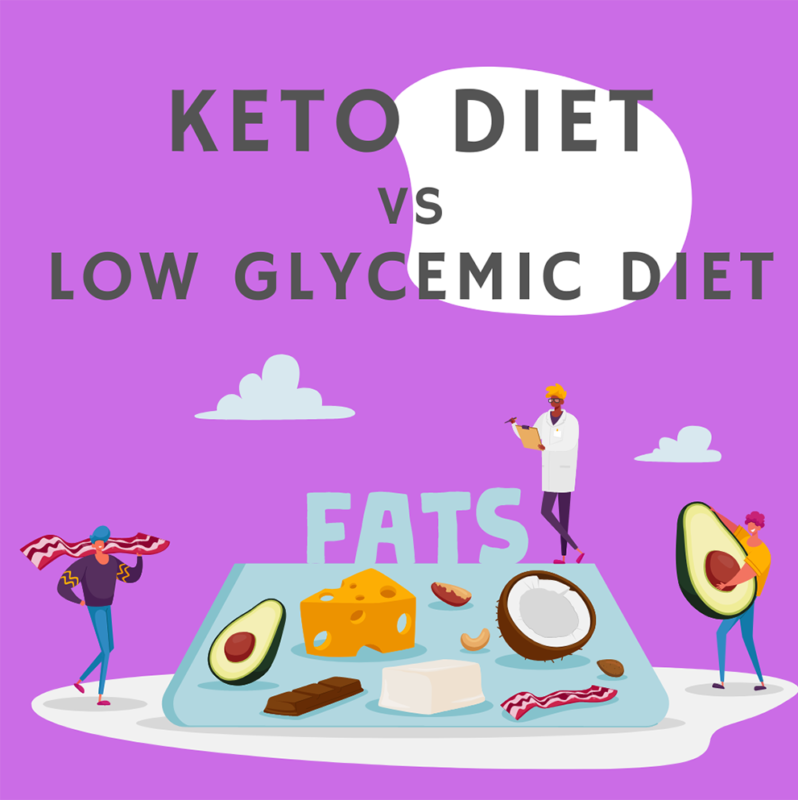
https://rdcu.be/c1yXV
CONCLUSIONS: The results of this study suggest that a 24-week, ketogenic diet was superior to a low-GI nutrigenetic diet at improving weight loss and health markers compared to baseline upon completion of the dietary intervention, but at 18-month follow up the low-GI nutrigenetic group fared better. These findings suggest that despite the better results in the ketogenic group following a 24-week dietary intervention, over longer periods the low-GI nutrigenetic diet may be useful in the treatment of both obesity and altered blood markers of metabolic health, and that these benefits appear to be maintained following the completion of a dietary intervention, an effective aid in long term lifestyle changes leading to sustained weight loss and health improvements.

Metabolic Inflexibility and the 21st-century food excesses
The epidemic of “modern” illnesses and how food plays its part in this can be seen manifested in the metabolic inflexibility of our population and having 37 million with diabetes, 52 million with arthritis, and 6 million IBD and Celiac cases. Ever since the Industrial age with all its inventions of mechanizing agriculture with a complete disregard for the environment, humans have achieved more food production than in any time in history. Too much of a good thing is not always a good thing. Having vast grocery stores at our fingertips, processed ready to eat meals has made it so very easy to over eat and to abuse food as a release valve for daily pressures. 1965 saw the invention of turning glucose into metabolically destructive fructose which food manufacturers quickly adopted in order to make bigger profits. We want to offer fructose reduced foods as well as sugar free, low glycemic foods. The seemingly ironic phrase that if you are hungry all the time it’s because you eat too much rings true and is at the heart of this mission statement.
There is little doubt that the high percentage of illnesses such as diabetes, liver disease, sleep and attention disorders, gastrointestinal, arthritis and more have been very much tied to the types of foods, the amounts of food and the frequency of eating foods. Those individuals that restrict their daily eating window actually lower their insulin-like growth, IGF1, which is one of the best markers for longevity and health span. The longer you fast, the more the mitochondria can repair themselves. Eating in a shorter window of time still allows you to eat the same amount of food, have better health, and live longer. Metabolic inflexibility is a person’s inability to readily switch from the ability to process sugars to being able to process fats and produce ketones while fasting and still be able to function in a healthy and productive manner.
We believe that packaged and prepared foods do not have to be unhealthy and shockingly imbalanced and addictive. Snacks can be satisfying and balanced. Fasting and exercise should be a part of everyone’s daily life.
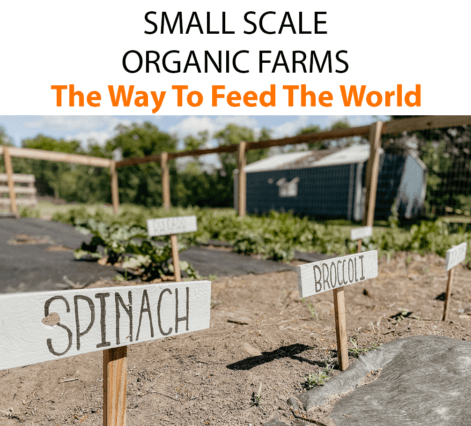
Food production's carbon footprint
It is time to recognize that big commercial agriculture is a major source of carbon emissions in trying to feed a growing population and has led to devastating impacts ranging from the loss of forests and wildlife habitats to soil degradation and water pollution. By preserving the natural biodiversity, open space, and trees, and by reducing land degradation, small farms provide a valuable ecosystem for wildlife, native plants, and people’s needs. If we are concerned about food production, small farms are more productive. If our concern is efficiency, they are more efficient, and they are a source of pride to the small farmer. No-till farmers grow crops with minimal disturbance to their fields and the organisms that call the soil their home and, in successive years, builds healthier soils while reducing money spent on fuel and labor.
The FDA should be split up into separate Food and Drug Bureaus: The current dual role makes no sense. It would be best if thousands of current FDA workers were transferred to the U.S. Department of Agriculture so that all food regulation occurs under one roof. The out-of-date format of the FDA invites greater risk, inefficiency, and inconsistency. into the important work of ensuring food safety, which affects everyone in America. The new Drug bureau would then be able to focus on its core responsibilities of drugs, devices, and biologics.
A 2013 publication from the UN Commission on Trade and Development (UNCTAD) titled “Trade and Environment Review 2013: Wake Up Before It’s Too Late,” urges the world to return to sound sustainable agricultural practices immediately. The United States leads the way in being highly irresponsible and short-sighted about the long-term effects of chemically intensive and corporate-dominated farming methods such as GMOs and monoculture-based crops. It is not sustainable and further, it leads to the destruction of genetically original native plant varieties. When they are gone, they are gone forever.
Millions of small organic farms need to be established and large corporate farming not allowed and phased out. Small farmers take pride and responsibility in how they operate, unlike big corporate agribusiness.